Tallest Building in the World – Current Rankings and Facts
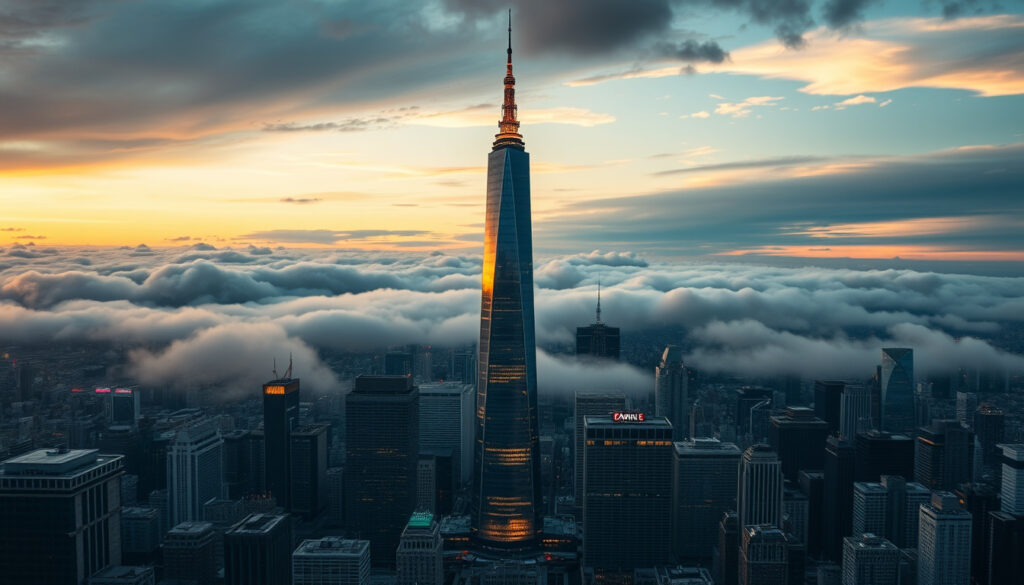
For nearly two decades, the title of world’s tallest building has belonged to a single structure in the Arabian Desert. The Burj Khalifa in Dubai stands at 828 meters (2,717 feet), a height that has kept all challengers at bay since 2009. Understanding the rankings, measurement standards, and future developments requires a closer look at how buildings are measured and ranked by the industry’s primary authority.
The Council on Tall Buildings and Urban Habitat (CTBUH) serves as the global standard for determining skyscraper heights. Their measurement criteria focus on architectural height to the highest significant point, excluding antennas unless they function as integral structural spires. This distinction matters because different organizations may report varying heights for the same building.
What is the tallest building in the world?
The Burj Khalifa has held the title of world’s tallest building since January 4, 2010, when it officially opened. At 828 meters (2,717 feet), it remains unrivaled in height. The building contains 163 floors and represents the pinnacle of modern skyscraper engineering.
Burj Khalifa stands at 828 meters (2,717 feet) in Dubai, UAE. It was completed in 2010 and remains the world’s tallest building by a significant margin. Guinness World Records certified this achievement, and the CTBUH continues to recognize it as the global leader.
Key facts about the tallest building
- Burj Khalifa exceeds the second-tallest building by 149 meters, a margin greater than most standalone skyscrapers
- Buildings exceeding 600 meters are classified as megatall; the Burj Khalifa remains the only structure surpassing 800 meters
- The tower’s height includes a structural spire that contributes significantly to its total measurement
- Guinness World Records officially certified the building’s status in 2010
- All top 10 tallest buildings exceed 500 meters, with five reaching megatall classification
- China hosts nine of the world’s top 20 tallest buildings, demonstrating the nation’s skyscraper boom
- The Petronas Towers, once the world’s tallest from 1998 to 2004, now rank outside the top 15
| Rank | Building | Height (m/ft) | City | Year |
|---|---|---|---|---|
| 1 | Burj Khalifa | 828 / 2,717 | Dubai | 2010 |
| 2 | Merdeka 118 | 679 / 2,227 | Kuala Lumpur | 2023 |
| 3 | Shanghai Tower | 632 / 2,073 | Shanghai | 2015 |
| 4 | Royal Clock Tower | 601 / 1,972 | Mecca | 2012 |
| 5 | Ping An Finance Center | 599 / 1,965 | Shenzhen | 2017 |
What are the 2nd and 3rd tallest buildings in the world?
Merdeka 118 in Kuala Lumpur, Malaysia, completed in 2023, stands as the world’s second-tallest building at 679 meters (2,227 feet). The structure contains 118 floors and represents Malaysia’s architectural ambition. Its completion pushed the once-dominant Taipei 101 further down the rankings.
The Shanghai Tower takes third place at 632 meters (2,073 feet). Located in China’s financial hub, this twisted supertall structure features a distinctive spiraling form that reduces wind loads. Completed in 2015, it remains the tallest building in China and exemplifies that nation’s rapid urban development.
Measurement disputes occasionally affect rankings. The One World Trade Center in New York reached its official height after CTBUH confirmed the spire as an architectural element rather than an antenna, securing its position as tallest in the Western Hemisphere at 541 meters.
The gap between first, second, and third
The 149-meter difference between Burj Khalifa and Merdeka 118 represents a margin larger than many buildings on the list entirely. This gap highlights how Burj Khalifa remains in a category of its own. Between second and third place, Shanghai Tower sits 47 meters shorter than Merdeka 118.
What are the top 20 tallest buildings in the world?
The current top 20 reflects a global distribution of tall buildings, though Asia dominates significantly. Nine of the twenty tallest buildings stand in China, including towers in Shanghai, Guangzhou, Tianjin, Beijing, Wuhan, Chongqing, and Changsha. This concentration stems from rapid urbanization and economic growth in the region over the past two decades.
Regional leaders among the top 20
Each major region now claims at least one representative among the world’s tallest. The Lotte World Tower in Seoul stands as South Korea’s leader at 555 meters. One World Trade Center remains the tallest in the Western Hemisphere at 541 meters. Lakhta Center in Saint Petersburg holds the title of tallest building in Europe at 462 meters.
The United States maintains two entries in the top 20: One World Trade Center at seventh place and Central Park Tower in New York City at 472 meters, which holds the distinction of being the world’s tallest residential building.
| Rank | Building | Height (m/ft) | Location | Year |
|---|---|---|---|---|
| 6 | Lotte World Tower | 555 / 1,819 | Seoul, South Korea | 2017 |
| 7 | One World Trade Center | 541 / 1,776 | New York City, USA | 2014 |
| 8 | Guangzhou CTF Finance Centre | 530 / 1,739 | Guangzhou, China | 2016 |
| 9 | Tianjin CTF Finance Centre | 530 / 1,739 | Tianjin, China | 2019 |
| 10 | CITIC Tower (China Zun) | 528 / 1,731 | Beijing, China | 2018 |
| 15 | Central Park Tower | 472 / 1,550 | New York City, USA | 2020-2021 |
| 16 | Lakhta Center | 462 / 1,516 | Saint Petersburg, Russia | 2019 |
| 20 | Changsha IFS Tower T1 | 452 / 1,483 | Changsha, China | 2018 |
What is the new or future tallest building in the world?
The Jeddah Tower in Saudi Arabia represents the most ambitious height project ever attempted. Originally designed to exceed 1,000 meters, construction stalled around 2018 at approximately 400 meters. If the project resumes, it would immediately claim the world record by a substantial margin.
CTBUH projections from 2012 anticipated significant Middle Eastern growth that did not fully materialize. Several proposed megatall projects experienced delays or cancellation, including the Pentominium in Dubai and Goldin Finance 117 in Tianjin, which remains unfinished at 597 meters.
No confirmed timeline exists for completion of the Jeddah Tower. While plans call for heights exceeding one kilometer, history shows that megatall projects frequently face delays due to technical challenges, funding issues, or changing market conditions.
Trends shaping future competition
Recent completions point toward continued Asian dominance. Merdeka 118 in 2023 demonstrated Malaysia’s capacity to challenge established skylines. Meanwhile, projects in Vietnam, the Philippines, and other emerging economies suggest the next generation of supertall buildings will spread across additional regions.
No confirmed timeline exists for structures surpassing Burj Khalifa. The CTBUH continues to monitor proposals across the Middle East and Asia, but specific 2050 projections remain speculative. Builders and architects have proposed numerous projects exceeding 600 meters, though most remain in early planning stages.
How has the tallest building changed over time?
The record for world’s tallest building has changed hands 25 times since the first skyscraper emerged in the late 19th century. Early record holders included the Home Insurance Building in Chicago and the Eiffel Tower in Paris. The Chrysler Building held the title for less than a year before the Empire State Building claimed it for 40 years.
- 1998: Petronas Towers in Kuala Lumpur become the world’s tallest at 452 meters, ending the dominance of American buildings
- 2004: Taipei 101 surpasses Petronas Towers at 508 meters, introducing Taiwan as a major skyscraper location
- 2010: Burj Khalifa opens at 828 meters, shattering previous records and introducing the megatall category
- 2023: Merdeka 118 completes at 679 meters, becoming the second-tallest building ever constructed
The pace of record-breaking accelerated in the early 21st century but has slowed since Burj Khalifa’s completion. No building has threatened its dominance in over 15 years, though Merdeka 118 narrowed the gap considerably when it finished construction.
What information is established versus uncertain?
Burj Khalifa at 828 meters holds the world record as of 2026. Merdeka 118 at 679 meters ranks second. Shanghai Tower at 632 meters ranks third. CTBUH and Guinness World Records both verify these rankings using standardized measurement criteria.
The status of unfinished projects like Jeddah Tower and Goldin Finance 117 may change. New announcements could alter future projections. Heights may be adjusted if CTBUH reconsiders spire classifications or if architectural modifications occur. For more details, see wie viele wochen hat ein monat.
Elements that remain unclear
- Whether Jeddah Tower will resume construction or when completion might occur
- Which city or country might construct the next building exceeding 800 meters
- Whether measurement standards will change for buildings with complex structural elements
- The specific timeline for proposed projects in early planning stages
- How economic factors might affect future megatall construction
Why does the Burj Khalifa remain at the top?
The Burj Khalifa’s continued dominance stems from both its extraordinary height and the technical challenges inherent in surpassing it. Building beyond 800 meters requires innovations in structural engineering, materials science, and wind management. The tower’s buttressed core design, inspired by the structure of desert flowers, distributes loads efficiently across its Y-shaped footprint.
Dubai’s ambitious urban development goals drove the project forward, but economic considerations also matter. Construction costs for megatall buildings reach into billions of dollars, and developers must balance prestige with financial viability. The Burj Khalifa benefited from unique circumstances including government backing and a favorable construction environment.
Architectural measurement standards established by CTBUH provide consistency in how buildings are evaluated. These standards ensure that height claims from different sources can be compared fairly, though occasional disputes arise over what constitutes architectural height versus tip height or spire classification.
How are skyscraper heights verified and sources cited?
“Burj Khalifa stands at 828 meters, holding the record for the world’s tallest building and the tallest structure since its completion in 2010.”
— Guinness World Records certification
The Council on Tall Buildings and Urban Habitat serves as the primary authority for skyscraper height rankings. Their technical standards define how buildings should be measured, and their official verdicts on disputed heights carry significant weight in the industry. The Skyscraper Center database maintained by CTBUH provides the most comprehensive and current information on building heights globally.
Guinness World Records independently verifies extreme achievements and maintains its own database of record holders. Guinness certifications complement CTBUH rankings by adding official recognition of superlative achievements.
Wikipedia’s tall buildings list aggregates data from multiple authoritative sources, providing extensive citations and historical context. This resource proves valuable for tracking changes over time, though heights should be verified against primary sources like CTBUH.
Summary
The Burj Khalifa in Dubai remains the world’s tallest building at 828 meters (2,717 feet), a position it has held since 2010. Merdeka 118 in Kuala Lumpur ranks second at 679 meters, followed by Shanghai Tower at 632 meters. The top 20 spans multiple continents, though China hosts nearly half of all entries. Future challengers like the stalled Jeddah Tower project suggest the race to exceed one kilometer will eventually continue, though no timeline is currently confirmed.
For those exploring real estate opportunities, the Homes for Sale Ottawa directory provides local market information alongside architectural insights.
Frequently asked questions
What is the 5th tallest building in the world?
The Ping An Finance Center in Shenzhen, China, ranks as the fifth tallest at 599 meters (1,965 feet). Completed in 2017, it features a mixed-use design combining office and residential spaces.
What is the tallest building in Montreal?
Montreal’s tallest building is the Place Ville Marie at 205 meters. Unlike global leaders, Montreal’s skyline reflects different urban development priorities, with heritage considerations influencing height limits in certain areas.
What is the tallest structure in North America?
One World Trade Center in New York City stands as the tallest structure in North America at 541 meters (1,776 feet). Its spire was confirmed by CTBUH as an architectural element rather than an antenna, qualifying it for the height measurement.
How is building height measured?
CTBUH measures architectural height to the highest significant architectural point, which typically includes spires but excludes antennas unless they serve as structural elements. This standard allows fair comparison across different building designs.
When was Burj Khalifa officially completed?
Burj Khalifa officially opened on January 4, 2010. Construction began in 2004, and the tower claimed the world record title before its grand opening ceremony.
Why do some buildings rank differently on various lists?
Different organizations use different measurement standards. Some include antenna height while others measure only architectural elements. CTBUH standards have become the industry benchmark, but variations exist across sources.
More related posts
 La Casa de los Famosos Colombia: Season 3 Cast, Voting & Stream
 Michael Oher Tuohy Conservatorship Controversy Explained
 18 Inch to CM: Exact Conversion & Real-World Examples
 Shawn Michaels: Career, Net Worth, and Life After WWE (2025)
 Olivia Rodrigo: Medical Condition, Controversies, Timeline
 Farah Khan: Biography, Husband, Age, Children & Movies
 Jennie Garth: Heart Condition, Feud, and Life After 90210
 Pakistani Sheer Khurma Near Me: Where to Find and Make It