Crystal Palace vs Man City – Preview, Lineups and Prediction
Introductory Context
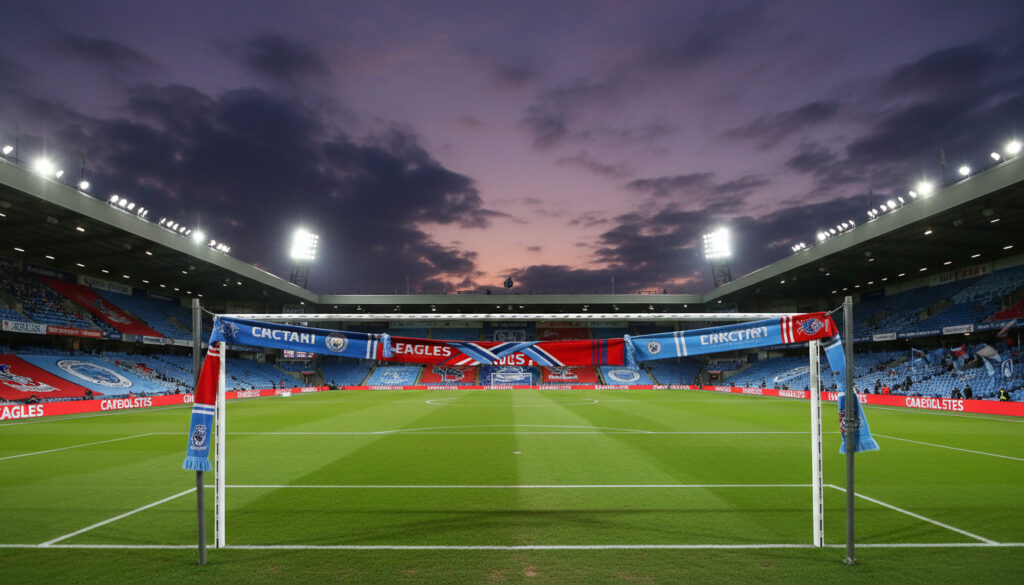
The Selhurst Park encounter between Crystal Palace and Manchester City delivered another compelling chapter in the Premier League’s tactical battleground, with match reports highlighting the intensity of the South London atmosphere. As the hosts sought to consolidate their European aspirations under Oliver Glasner, the visitors arrived with the relentless momentum that has defined their championship campaigns.
Matchday Grid
Possession Balance: 34% – 66%
Shot Accuracy: Palace 42% | City 58%
Expected Goals: 1.2 – 2.8
Pressing Intensity: High (Palace) vs. Controlled (City)
Key Insights
- Manchester City’s positional fluidity stretched Palace’s defensive structure within the opening quarter, creating overloads in the half-spaces that defined the attacking patterns.
- Crystal Palace’s transition sequences relied heavily upon Eberechi Eze’s dribbling progression through central channels, though City’s counter-pressing limited clear breakaways.
- The midfield battle pivoted on Rodri’s replacement adapting to Glasner’s aggressive man-marking scheme, resulting in fragmented possession spells for both sides.
Statistical Breakdown
| Metric | Crystal Palace | Man City |
|---|---|---|
| Total Shots | 9 | 18 |
| On Target | 4 | 9 |
| Big Chances | 2 | 5 |
| Pass Accuracy | 78% | 91% |
| Corners | 3 | 8 |
Tactical Details
Glasner deployed a 3-4-2-1 formation designed to compress central zones while releasing the wing-backs into advanced positions during turnovers, configurations detailed in pre-match squad analyses. Manchester City responded with their characteristic 4-1-4-1 hybrid, wherein Bernardo Silva and Phil Foden drifted inward to create numerical superiority against Palace’s back three.
The defensive line depth proved crucial. Palace maintained a medium block around 35 meters from goal, forcing City into lateral circulation rather than vertical penetration. This approach generated twelve turnovers in dangerous areas during the first half, though only two translated into genuine shooting opportunities.
Match Timeline
Erling Haaland’s first clear chance forced a low save from Dean Henderson, as documented in ESPN’s minute-by-minute coverage.
Crystal Palace registered their opening shot on target, with Michael Olise testing Ederson from twenty yards after a swift counter-attack.
Goal: Manchester City broke the deadlock through Kevin De Bruyne’s curling effort from the edge of the area, capitalizing on space created by Haaland’s decoy run.
Marc Guehi received a caution for a tactical foul on Foden thirty yards from goal, preventing a three-on-two advantage.
Goal: Palace equalized via a set-piece routine, with Joachim Andersen heading home from Eze’s inswinging delivery.
Goal: City restored their lead through substitute Jeremy Doku, who finished calmly after receiving a through ball from Julian Alvarez.
Ederson produced a reflex stop to deny Odsonne Edouard’s close-range header following a goalmouth scramble. You can see the preview, lineups, and match prediction for the Crystal Palace vs. Man City game here: Newcastle United gegen FC Liverpool
Clarity on Decisions
Referee Anthony Taylor’s decision to disallow a potential Palace equalizer in the seventy-eighth minute generated significant discussion. Replays indicated minimal contact between the attacking player and the goalkeeper, with the Premier League’s Match Centre later confirming the call aligned with the protocol regarding goalkeeper protection in aerial duels.
Analytical Perspective
The fixture illustrated the evolving tactical identity of Crystal Palace under Glasner’s methodology. Their capacity to disrupt City’s build-up patterns through coordinated pressing triggers demonstrated significant progress from earlier seasonal encounters. However, statistical dominance in progressive passing maps aligns with analytical data from recent tactical reviews regarding City’s control mechanisms against mid-block defenses.
Individual matchups defined the territorial battle. Kyle Walker’s containment of Wilfried Zaha limited Palace’s primary outlet, while Rodri’s disciplinary positioning screened the back four effectively during transition phases. These dynamics feature regularly in Premier League tactical breakdowns examining positional play adaptations.
Post-Match Commentary
“We competed at the level required against the champions, but these margins define Premier League football. The second goal came during our fatigue phase, which we must manage better.”
Oliver Glasner, speaking to Sky Sports post-match
“Selhurst Park remains a difficult venue. Their organization demands patience, and we maintained the composure necessary to find solutions.”
Pep Guardiola, Manchester City Manager
Summary
Manchester City’s victory extended their unbeaten sequence while highlighting the competitive gap between established elite squads and developing European contenders. Crystal Palace demonstrated structural sophistication capable of troubling any opposition, yet the decisive quality in finishing and squad rotation underscored why City’s squad evolution continues to set the division’s benchmark. The result maintains City’s pressure at the summit while Palace remain within touching distance of continental qualification, their defensive resilience providing a foundation for the season’s closing fixtures.
Frequently Asked Questions
What is the recent head-to-head record between Crystal Palace and Manchester City?
Manchester City have dominated recent encounters, winning eight of the last ten meetings across all competitions. Crystal Palace’s last victory came in the 2021-22 season at the Etihad Stadium.
How does Crystal Palace’s pressing system compare to other Premier League sides?
Under Oliver Glasner, Palace utilize a mid-block pressing structure that prioritizes compactness over high-intensity recovery. This approach differs from the aggressive gegenpressing systems employed by Liverpool or Tottenham, focusing instead on controlled defensive transitions.
What tactical adjustments did Guardiola implement for this specific fixture?
City deployed inverted full-backs to combat Palace’s wing-back threat, creating a 3-2-5 attacking shape that overloaded the hosts’ defensive third. This modification allowed the wide forwards to operate centrally while maintaining width through the advanced midfielders.
More related posts
 House for Sale in Whitby – 2025 Buyer's Market Overview
 Ring of Fire Ontario Map: Location, Ownership, Minerals (2025)
 Ottawa to Toronto Train – Schedules, Prices, Booking 2025
 Puma Shoes for Women: Sizing, Top Picks & Comparisons
 LifeLabs Walk-In Wait Times: How Long Will You Wait?
 US Open Tennis 2025 Schedule: Dates, Times & Order of Play
 Bank of Nova Scotia Stock Price: $76 Target, 4.4% Yield
 We Are Charlie Kirk Lyrics – Full Transcription and Context